
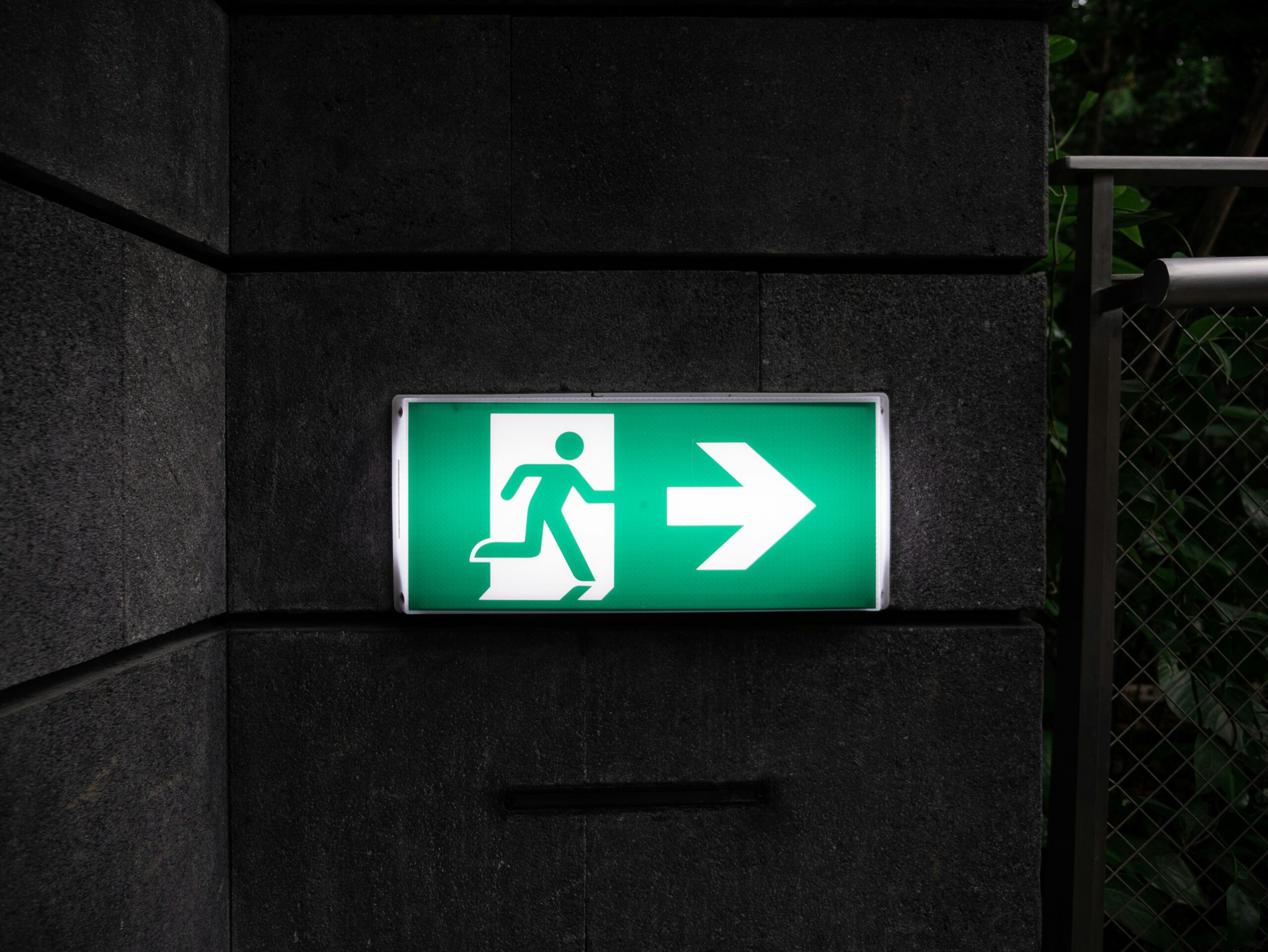
What happens at your hotel or destination if the fire alarm goes off today and the elevators are put out of service?
As a Chilean native, my brain learned to respond quickly to earthquakes. But during 9/11, a blind man had to rely on his Golden Retriever to escape from the 75th floor because the elevators failed. It reminds me of the green “EXIT” sign designed in Japan; it’s a universal icon that teaches everyone how to escape, regardless of language.Japan submitted the design to the ISO in 1980, and it quickly became widespread nationwide.
Most content around Accessible Travel focuses on the “beautiful side”: pristine ramps and inclusive beaches. But true accessibility is not just for vacations; true accessibility is for survival.
Historically, emergencies are ruthless toward people with disabilities. Evacuation reports from 9/11 estimate that dozens of individuals with reduced mobility could not escape the towers. While tools like evacuation chairs saved lives that day, two massive, silent flaws still remain in modern hospitality infrastructure:
1. The Acoustic Barrier:
Alarms are often exclusively sound-based. In terminals, hotels, and transit hubs, deaf passengers and guests cannot hear emergency announcements. Without strobe lights or under-pillow vibration alerts, you leave guests blind to danger.
Alarms are often exclusively sound-based. In terminals, hotels, and transit hubs, deaf passengers and guests cannot hear emergency announcements. Without strobe lights or under-pillow vibration alerts, you leave guests blind to danger.
2. The “Passive Waiting” Protocol:
Telling wheelchair users to “wait in the refuge area until firefighters arrive” is not a plan; it’s a lottery against time. Data shows that people with disabilities are 2 to 4 times more likely to die or be injured during a disaster due to inaccessible systems.
Telling wheelchair users to “wait in the refuge area until firefighters arrive” is not a plan; it’s a lottery against time. Data shows that people with disabilities are 2 to 4 times more likely to die or be injured during a disaster due to inaccessible systems.
If a hotel sells an accessible room on the 12th floor, it has a moral and operational obligation to guarantee that guests can escape when technology fails.
Don’t just design for comfort. Design for safety.
Does your organization have a real, trained evacuation protocol for guests with invisible disabilities, deafness, or reduced mobility? Let’s discuss it below.
#AccessibleTravel #HotelSafety #InclusiveTourism #DisabilityRights #RiskManagement #HospitalityIndustry#
— Consuelo