
More Than a Pet: What Guide Dogs Teach Us About Inclusion
Everybody that knows me well, knows that I am a fan of Golden Retriever and Yellow Labs. In one of my flights from Atlanta to Portland, OR I encountered without realizing that a Yellow Lab was sitting on the floor near its owner. My first gesture was to pet her but, my own intuition told me not to even try.. For almost 4 hours she didn’t even move.
“Imagine you’ve booked a ride to an important meeting. The car pulls up, the driver sees you, sees your guide dog, and drives away. Late, stranded, and humiliated, all before the day has started.
This happens to guide dog handlers more often than most of us would like to believe. Today I want to talk about guide dogs: what they do, what most people get wrong, and what we can all do, especially at work, to be better partners in inclusion.”
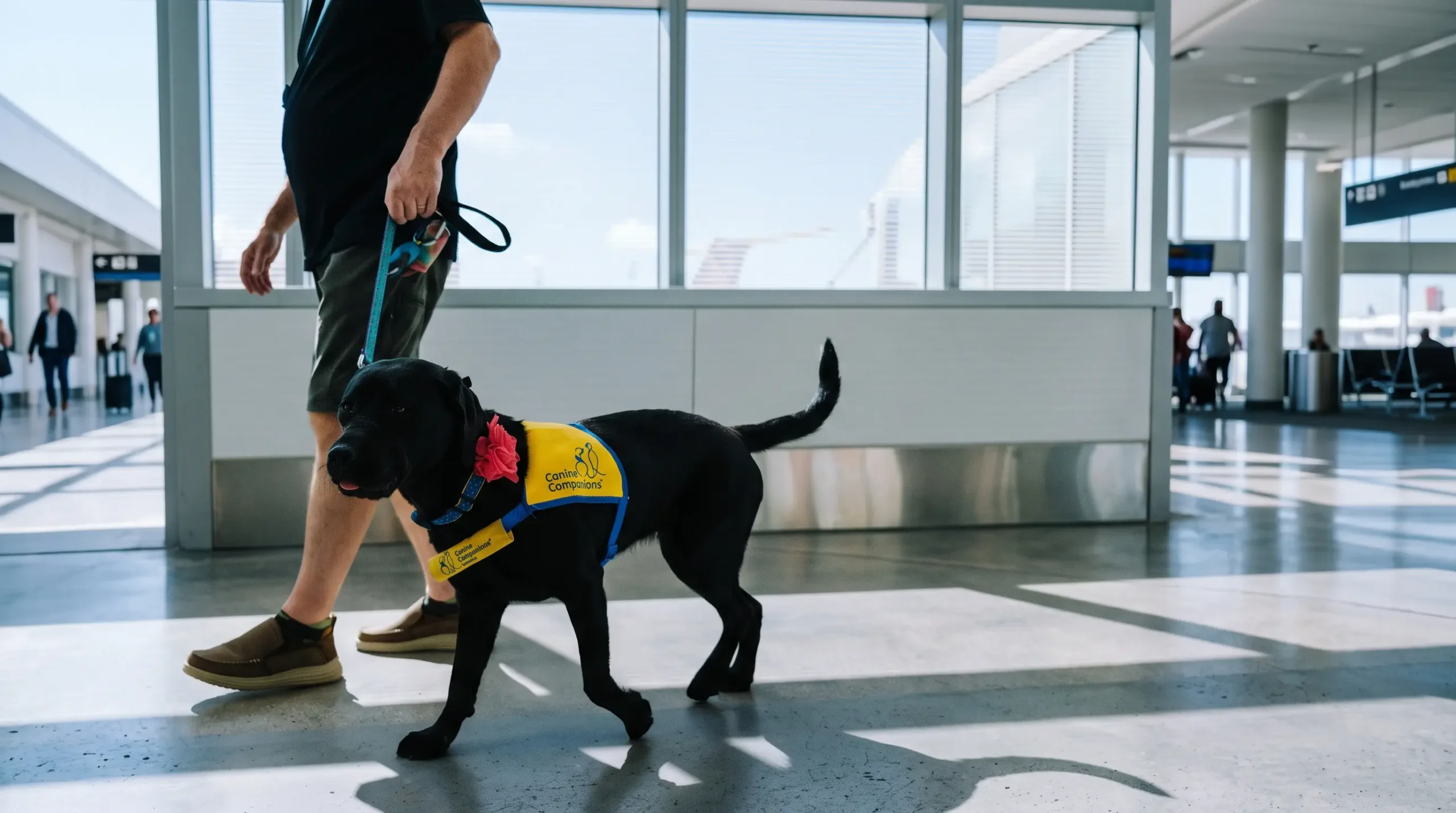
“A guide dog isn’t a pet, and it isn’t a robot. It’s a trained working partner. The dog helps its handler stop at curbs, avoid obstacles, and find doors, stairs, and crossings. Here’s a detail many people miss: the dog doesn’t decide where to go. The handler knows the route and gives the commands. The dog makes sure they get there safely.
It’s a partnership that takes years of training: from puppy raisers, to professional trainers, to months of matching and training the dog with its new handler. It’s an enormous investment, and every distraction can undo some of it.”
“Myth one: every blind person has a guide dog. They don’t. Many use a white cane, a smartphone with GPS and apps, or a combination. A guide dog is a personal choice, not a requirement.
Myth two: the dog is friendly, so I can say hello. When the harness is on, the dog is at work. Petting, feeding, calling, or making noises at the dog can distract it at exactly the wrong moment, like a crossing. The rule is simple: talk to the person, not the dog.
Myth three: a business can refuse a service dog. In the US, the ADA gives people with disabilities the right to bring service dogs into most public places. Staff can ask only two questions: is the dog required because of a disability, and what task is it trained to do. They can’t demand paperwork or an ID card, and they can’t charge extra fees. The same goes for taxis and rideshares.”
“Now let’s make this practical. Say a new colleague joins your team with a guide dog. What should you do?
First, prepare, don’t panic. Ask the new hire what they need, and don’t assume. Plan a desk with floor space for the dog, a quiet spot, and access to a relief area.
Second, brief the team. Share a few simple etiquette rules before day one. Ask about allergies or fears in advance and solve them quietly, with seating changes, for example, rather than making it a debate.
Third, check your building and your tools. Are the entrances clear? Is the office layout predictable? Are your documents, slides, and internal tools usable with a screen reader? A guide dog helps with the physical world, but it can’t fix an inaccessible PDF.
Fourth, make it normal. The best inclusion is boring. The dog sleeps under the desk, the meeting starts on time, and everyone gets their work done.”
“Guide dogs show us something important about accessibility: independence doesn’t come from special treatment. It comes from removing barriers. The handler isn’t asking for sympathy. They’re asking for a fair chance to get to work, get a coffee, and take a ride like anyone else.”
#dogguide #DogTraining #PuppyTraining #PositiveReinforcement #DogBehavior #ObedienceTraining #TrainYourDog
— Consuelo